
How the Tyron Multiband stops a burst tyre coming off the rim
A tyre bursts at highway speed. What happens next depends on one thing: does the flat tyre stay on the wheel, or come off it?
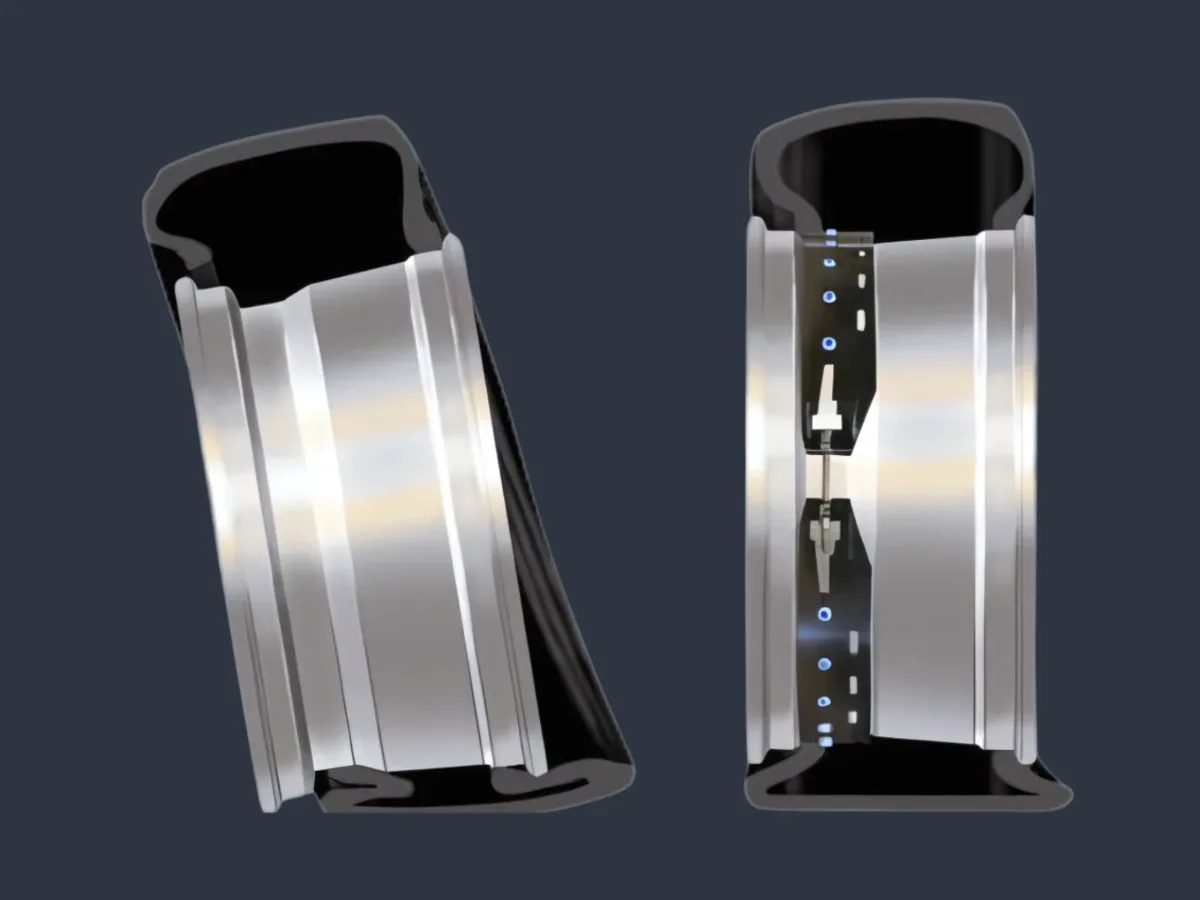
- Air holds your tyre on the rim. Every wheel has a deep groove, needed to fit and remove tyres. Only air pressure keeps the tyre out of it.
- Without Tyron: Then the air is gone. A pothole, debris, heat or an ageing tyre. It happens to careful drivers too.
- Without Tyron: The tyre drops into the groove. With no air, the edge of the tyre can fall into the groove.
- Without Tyron: The tyre can come off the rim. The edge in the groove gives the tyre slack, so the rest can slip over the rim. Steering and brakes can stop answering.
- With Tyron: The Multiband fills the groove. The band and its feet fill the groove. With no groove, the tyre has nowhere to fall.
- With Tyron: Locked on. It stays on. The band locks the flat tyre onto the rim, forming a cushion of rubber between the wheel and the road. You steer, you brake, you pull over.
Air holds your tyre on the rim.
Every wheel has a deep groove, needed to fit and remove tyres. Only air pressure keeps the tyre out of it.
Then the air is gone.
A pothole, debris, heat or an ageing tyre. It happens to careful drivers too.
The tyre drops into the groove.
With no air, the edge of the tyre can fall into the groove.
The tyre can come off the rim.
The edge in the groove gives the tyre slack, so the rest can slip over the rim. Steering and brakes can stop answering.
The Multiband fills the groove.
The band and its feet fill the groove. With no groove, the tyre has nowhere to fall.
Locked on. It stays on.
The band locks the flat tyre onto the rim, forming a cushion of rubber between the wheel and the road. You steer, you brake, you pull over.
See how it works.
The band fills the well in the rim, so a flat tyre has nowhere to drop. Tyron first called it the Safety Band.
Not about how you drive.
A blowout can happen to a careful driver, at any speed. These six cause most of them, and you rarely see any of them coming.
Debris
A nail, a bolt, a strip of dropped load. The tyre can lose air slowly for days, then all at once at speed.
Potholes
A hard edge pinches the sidewall against the rim. The bruise is inside the tyre, where you cannot see it.
Low pressure
An under-inflated tyre flexes more and runs hotter. It is the usual start of a highway blowout.
Heat
Afternoon tarmac, a long run at speed, a hot brake. Heat weakens rubber that is already tired.
Ageing tyres
Rubber hardens and cracks with the years, even with tread left. The date code on the sidewall tells you.
Overloading
A full car, a roof box, a trailer. Weight beyond the rating builds heat in the sidewall.
None of these are a driving mistake. The part you can plan for is what the wheel does next.
What it does, and what it does not.
It does
Keep the flat tyre on the rim, so you keep steering and brakes and reach a safe place under control.
It does not
Stop punctures, or replace a run-flat tyre for long distances. It gives you a medium distance at reduced speed to get somewhere safe.
Keep your tyres. Add the safety.
How far you can drive on a flat depends on the tyre and the road. In TÜV testing the Multiband completed 3 km at 80 km/h, then 3 km at 50 km/h, through a handling course and slalom. Run-flat distance and ride vary by tyre maker.
TÜV tested
Tested by TÜV.
In TÜV testing the Multiband completed 3 km at 80 km/h, then 3 km at 50 km/h, through a handling course and slalom. How far you can drive on a flat depends on the tyre and the road.
Who already drives on it
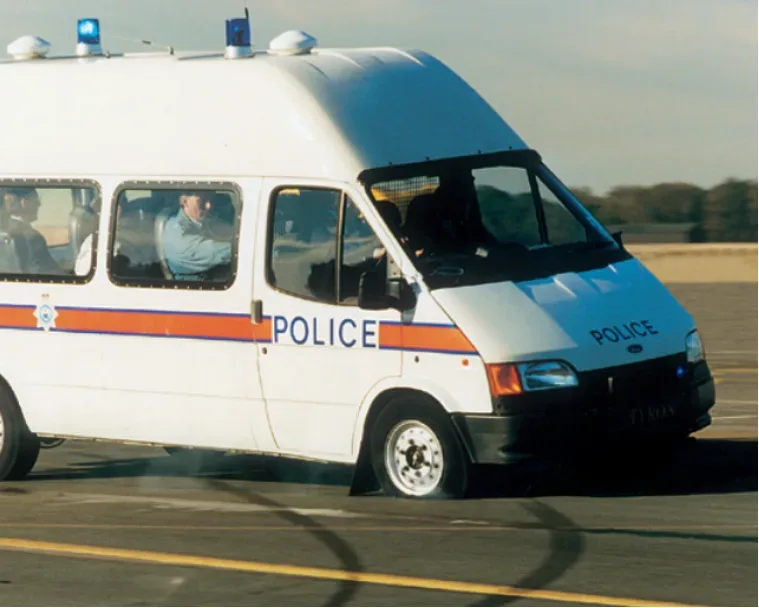
Ambulances, fire engines and police cars.
Vehicles that cannot afford to stop when a tyre goes. Tyron has made flat tyre protection since 1977, and military, police and emergency fleets specify it.